The Truth About “Skinny Drops”
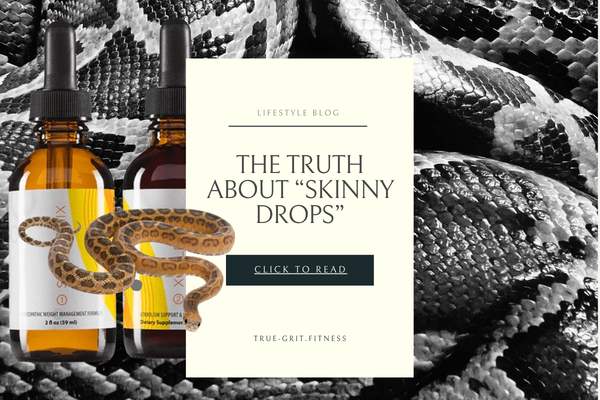
The Truth About “Skinny Drops”
Table of Contents
Why We Fall for Quick Fixes
The Rise of Predatory Products
Breaking Down the Product Claims
What’s Actually Causing Weight Loss
The Role of Identity in Results
Why These Companies Keep Winning
What to Do Instead
Why We Fall for Quick Fixes
We’re all hardwired to look for the simplest path forward, and I believe that that can get mislabeled as lazy sometimes. So it comes as no surprise when a product comes out that promises rapid results and people quickly flock to it. Unfortunately, this gives predatory markets an easy in with buyers, with women most likely to be targeted.
The Rise of Predatory Products
There is one company in particular, though there are many out there, that I came across awhile back that’s a multi-level marketing company called Partner Co that has a flagship skinny drop product called Slenderiiz.
The first time I called out this company on socials I had one of their reps come to their rescue who shared a bunch of information meant to sway my opinion. Instead, it was so wrought with misinformation, pseudoscience, and one poorly done study that is a laughing stock in the world of scientific research that all it did was pour kerosene on my fire.
I said my peace and moved on, for a while.
When the Claims Don’t Add Up
The charlatans are back at it, not that they ever stopped, with a gut healing protocol that actually contradicts itself in many ways by providing temporary relief of bloat and water weight. However, it adds more injury to the gut by stripping it of healthy bacteria and irritating the lining. And to promote it they are telling people bold-faced lies or poorly misunderstood talking points misquoted by reps who are not qualified to be giving out health advice.
Am I venting a little here? Yes, the catharsis of writing it out to bring awareness is real. However, I feel a sense of responsibility to call out their actions as they prey upon people’s natural tendency for quick solutions. What’s worse, the reps, made up mostly of women, in this company seem to give up their powers of deduction by not looking beyond the information the company feeds them.
Breaking Down the Product
The Slenderiiz skinnydrops comes as a set with their Xceler8. Slenderiiz uses ingredients that can test well in blunting appetite, however, they tell you it’s diluted to make it more potent…Umm, come again???
They somehow have people believing that by adding water to something it will bring out its potency. When I was in bartending I knew very well that bars will get in trouble if they water down their liquor to stretch out their inventory and increase sales as people’s buzz remains weak.
In other words, it’s a placebo that uses trace amounts of ingredients that are no longer potent enough to carry the desired effect. And it's not cheap and it's not the only product of theirs that they do this with.
What’s Actually Causing Weight Loss
But wait, people also say they see an increase in energy. I’m sure they do because the Xceler8 has some of the same supplements I take, with mine being at a dramatically cheaper price, that supports my energy and mood. B vitamins and adaptogens, like rhodiola, will make a noticeable difference in someone, especially if they are deficient.
Now, what about the weight loss part?
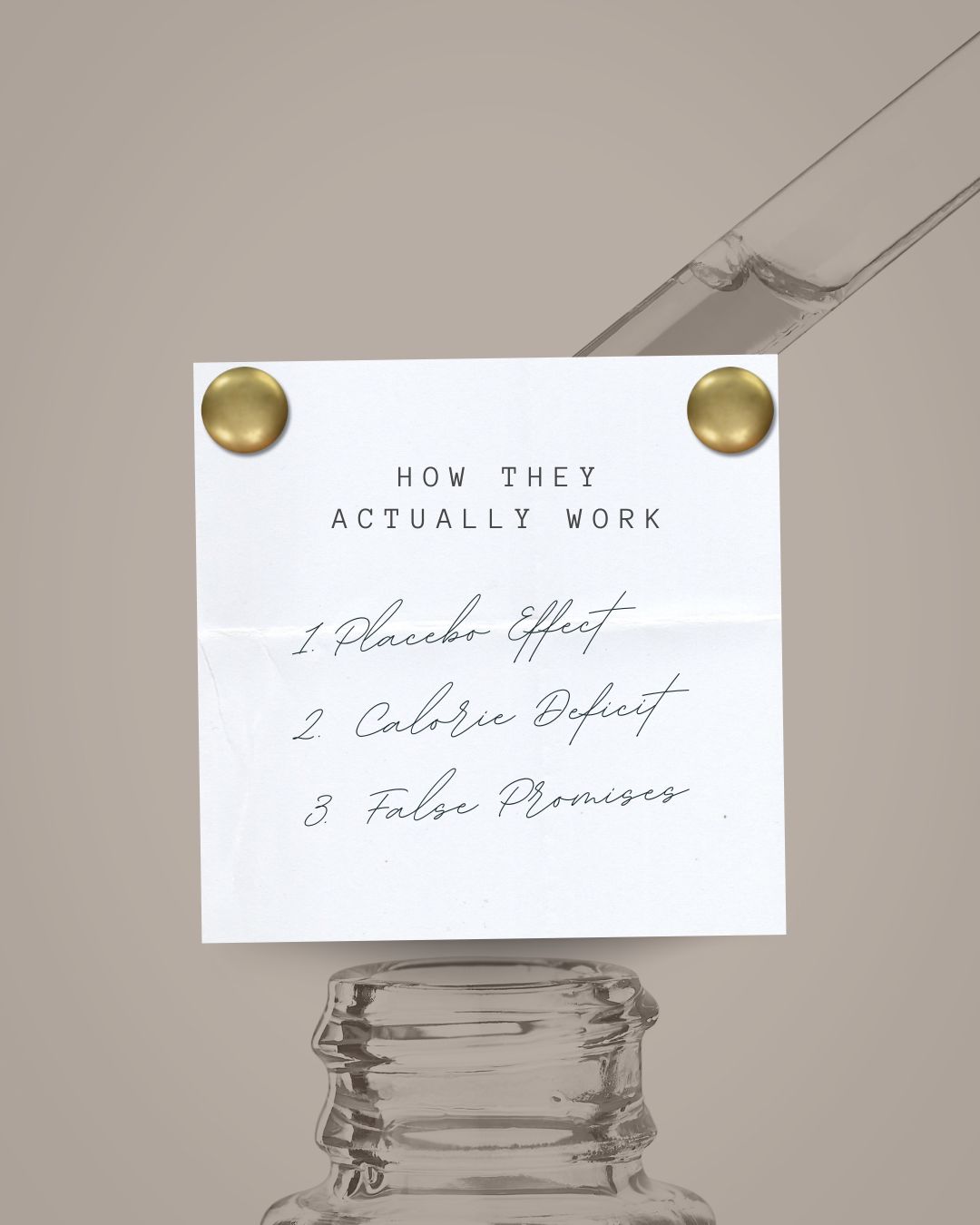
The placebo can be helpful in a person’s perception of having a blunted appetite, but that’s it. What really takes place is they put you on a hyper-restrictive diet for months.
1250 calories (this is way too low and not sustainable, but is the number one way to get anyone to drop a ton of weight, to include muscle, quickly)
No processed foods (this makes it easier to reduce calories)
No pasta, rices, or white potatoes (these are easy to over consume as well as store additional water weight which effects the illusion of weight loss)
But there’s something at play that actually is blunting a person’s appetite on this protocol, it’s protein. They instruct you to increase protein, which is highly satiating as it decreases hunger signals, to put it simply.
The Role of Identity
The biggest pushback I’m getting now are by the people with a financial interest in the business. They’re usually the ones who see the greatest results, which ties into another thing I love to work with clients on, which is identity. There is also a large ecosystem present that helps embolden them. It's easy to see when there are tons of responses to their social media posts, hyping up the product. Except, if you click on their profiles you'll see that nearly every single one of them is also a rep of the company.
The ones peddling the product have big buy-in to the company to the point it becomes identity. They are a part of a wellness group and, without realizing it, begin to adopt a wellness mindset around their identity and lifestyle.
To play devil’s advocate, I can appreciate an effective road to getting someone healthy. However, it’s on the backs of people getting sold modern-day snake oil that has a high probability of backfiring later on.
Why These Results Don’t Last
What do I mean by this? When their customers, the ones who don’t become part of the company, put their faith into something external to keep them on track, they have a high likelihood of falling back into old habits once the crutch is removed.
This could be that they fell out of the habit of taking the product, they had to cut back on expenses, or the company goes belly up. I’m not saying this as a rule, but it is one of the issues we find when people will yo-yo on their health and fitness to the tune of an 80–95% failure rate.
I also don't like how people give over their autonomy to the company. Many will claim they tried everything in the past and nothing worked until they started the drops. What I believe to be the difference is structure and pressure, not drops.
I see it all the time. People making what they think are healthy swaps: sugary sodas to sugary juices; chips for organic chips; restrict all day only to binge at night or on the weekends; get on cardio or group classes and fall off...the list goes on.
However, when they become part of the ecosystem they are given a list of instructions around a strict diet, they are shamed into sticking to the diet because even though the drops supposedly work, if you don't stick to the rules you'll be told it's not working because you're not doing what they told you, and the group pressure to praise the product is real as most of what you see is positive testimony. To contradict that, you risk being lumped as an outsider, so you believe even harder in the product that doesn't actually work. It really is insidious and therefore frustrating to see people get trapped in as they buy product after product thinking it's the products that are doing the work and not the fat loss and healthier diets (if you don't count the low calories).
Why These Companies Stick Around
But one may ask how a company like this stays in business for so long if the product is a lame duck.
Quick fix products are highly marketable for all the reasons I previously mentioned, and then some. The company is also able to cast a wide net to capture as many new customers as possible to offset the ones falling off.
These companies get big enough to show big profits for those at the top without drawing much negative attention in the media when things happen, like their F rating from the Better Business Bureau or when UK regulations told them their singular study wasn’t enough to warrant them making the kind of claims they usually get away with making in the U.S.
Something funny to note is that the longest known snake oil salesman from way back in the day that I could find recorded managed to stay in business for over 30 years. We can also note that cigarettes have managed to stay in business despite how awful they are.
Then there's the constant restructuring, merging, and rebranding over the last couple decades as a way to keep things looking fresh while also dodging a bad reputation. This is always a big red flag for an MLM or “network marketing”, as some like to call themselves, type company.
What to Do Instead
I’ll wrap it up here to leave you with this piece of advice: Do not take a company’s word at face value, even if it’s coming from a good friend or relative that’s gotten sucked in.
And when they try to prove their worth through internal videos and studies, that’s even more reason to jump on an AI tool and ask it to give you an unbiased, scientifically backed objective analysis of the product and company claims.
This will give you instant answers and save you time wondering if it truly is too good to be true. Because, it is.
Simple Action Steps
Question any product promising rapid results.
Focus on sustainable nutrition over extreme restriction.
Prioritize protein intake for satiety.
Avoid relying on products as a long-term solution.
Research claims using unbiased sources.
FAQ
Do weight loss products like this actually work?
They can lead to short-term weight loss, but often due to calorie restriction rather than the product itself.
Why do people still see results?
Most results come from reduced calorie intake, increased protein, and behavior changes.
Are MLM health products reliable?
Many rely heavily on marketing and anecdotal evidence rather than strong scientific backing.
What is the biggest risk with these products?
They can create dependency on external tools rather than building sustainable habits. Many people will also fall into debt to make the monthly purchase requirements if they go the route of becoming part of the company.
How can you spot misleading health claims?
Look for exaggerated promises, lack of independent research, and reliance on testimonials.
What's Next
If you’re tired of feeling overwhelmed by health advice, fitness programs, and lifestyle content, start with simplicity.
Choose one small habit today. Commit to it for a week.
If you want help building a system that supports consistency without burnout, join me inside M.O.V.E. Studio. It’s designed to feel calm, grounded, and actionable so you can build health that actually fits your life.
Simple. Sustainable. Repeatable.
That’s where real change begins.
